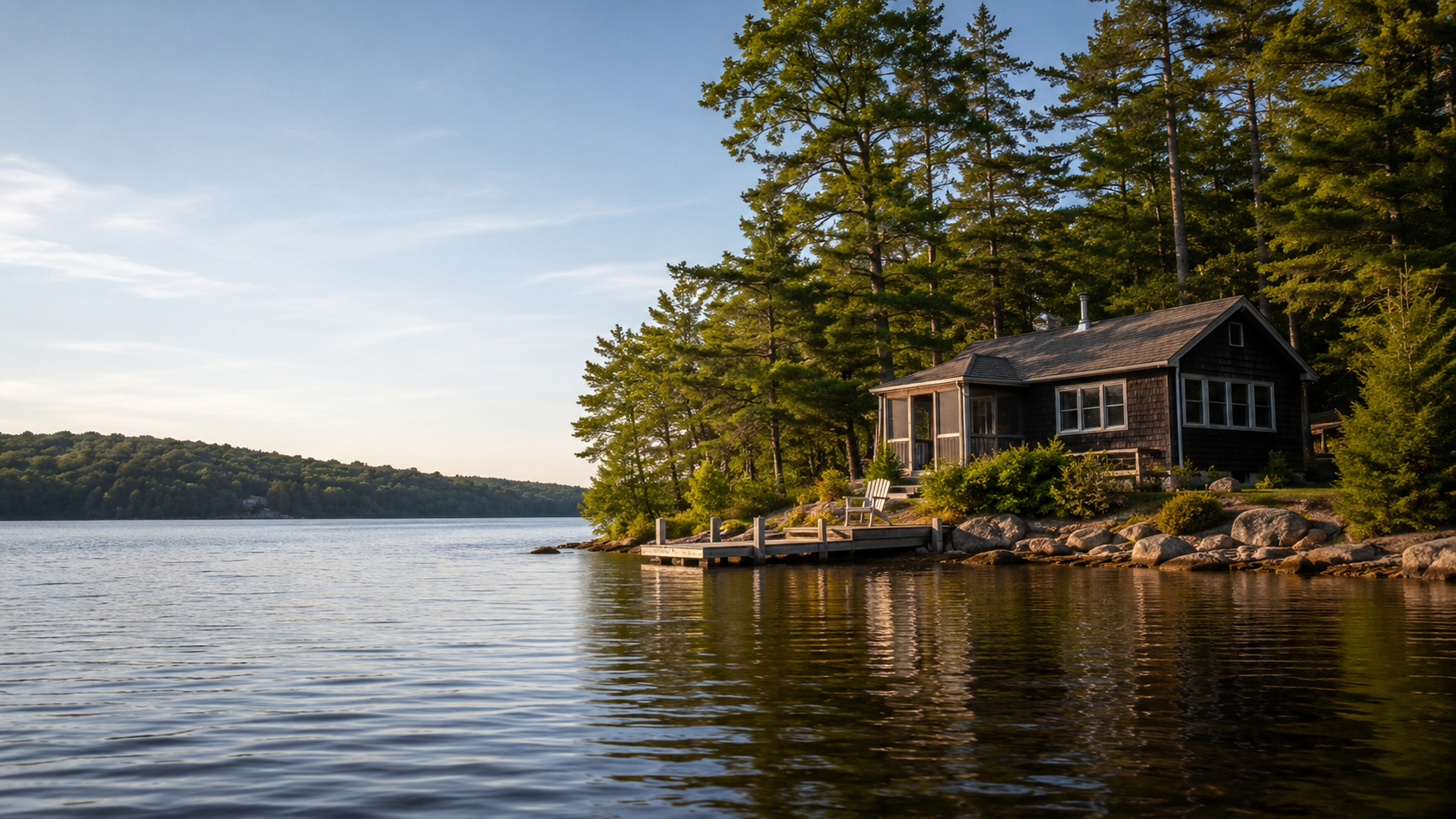
 Buying a smaller Maine lakefront camp can be an appealing way to enjoy waterfront ownership at a more accessible price point. For many buyers considering Maine waterfront property, the long-term plan may include adding a bedroom, enlarging the living area, building a garage, or creating a larger deck.
Before purchasing a camp on a Maine lake with plans to expand, it is important to understand the property’s Shoreland Zoning rules.
Many older Maine waterfront camps were built closer to the water than current setback requirements allow. They may be legally existing but considered nonconforming. That does not automatically mean improvements are impossible, but it can affect where, how, and how much the camp may be expanded.
Buyers may hear reference to the “30% rule.” In some Maine communities, older local ordinances limit the expansion of a nonconforming structure to less than 30% of its original floor area and volume. Other communities may use additional standards involving the camp’s footprint, height, setback from the water, prior expansion history, lot coverage, and septic capacity.
The important takeaway for anyone buying a Maine lakefront camp is not to assume a small seasonal property can simply become a larger year-round home later. Before making an offer or during the due diligence period ask the local Code Enforcement Officer about the property’s shoreland setbacks, prior permits, septic system, and realistic options for future expansion.
A smaller camp can still be an excellent Maine waterfront investment. The key is confirming that your future plans fit the property before you buy.